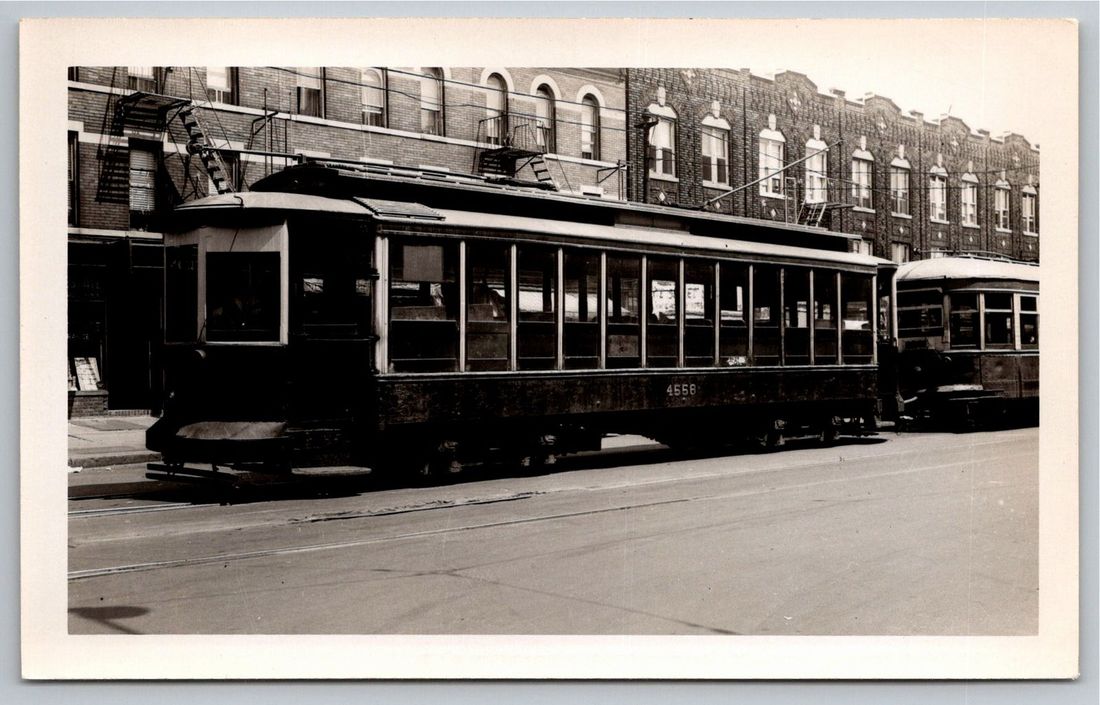
1947 Brooklyn NYC B&QT Streetcar Trolley 4558 Church Ave Photo
📸 Click any thumbnail to inspect Front, Back & Angles (2 Photos)
🔗 Embed / Cite This Archival Image (Free with Attribution)Get HTML Code
© USA RESELL. Bloggers, historians, and website owners may embed this image for free by copying the HTML code below (which includes the required credit link back to this page):
USA RESELL is a living historical archive. Because original artifacts are one-of-a-kind and source records change rapidly, use the button above to check live marketplace availability or locate surviving examples. As an eBay Partner, we may earn a commission on qualifying purchases.
Item Specifications
- City: Brooklyn
- State: New York
- Country: United States
- Era: 1940s
- Subject: Streetcar Trolley Transit Brooklyn Queens Transit
- Theme: Transportation
- Category: Vintage Photography
- Format / Type: Vintage Photographs
Historical Context & Overview
Mid-Century Transit History Captured in Brooklyn
This authentic 1947 black-and-white gelatin-silver photograph offers a fascinating glance into the post-World War II surface transit system of Brooklyn, New York. Captured at the busy intersection of Church Avenue and McDonald Avenue, the image features Brooklyn & Queens Transit (B&QT) streetcar #4558 actively towing decommissioned trolley car #5000 along the embedded street tracks.
Set against a classic mid-century Brooklyn streetscape, the photograph highlights multi-story brick apartment buildings fitted with traditional iron fire escapes. Overhead electrical lines crisscross above the thoroughfare, documenting the complex power infrastructure that driven municipal rail transport across the borough before line abandonments and bus transitions dominated the era.
Historical Context & Collector Provenance
During the first half of the 20th century, electric streetcars formed the backbone of public transportation throughout Brooklyn and Queens. As automobile ownership expanded and municipal policies shifted toward motorized buses, the extensive rail networks operated by the B&QT were gradually phased out, making rare operational captures like car towing particularly significant to transit historians.
The reverse side of this glossy 5.6 x 3.5 inch photographic print retains exceptional historical provenance. It features ink stamps and handwritten notations detailing the exact event: "Bb QT Div 4558 towing 5000 to be junked Church Ave & McDonald 1947?". Former collection markings link the photograph to transit enthusiast Jeffrey Winslow of Franklin Square, N.Y. Additional typed notes provide research on sister cars, noting preserved units such as #4573 at the Branford Electric Railway Association, #4547 at the Seashore Electric Railway in Maine, and #4550 acquired by the Edaville Railroad in Massachusetts.
Preserved on sturdy cardstock with light natural surface aging on the back, this original vintage photograph serves as a fine artifact of New York City transportation history.
Photographic Craft & Technical Detail
Produced on sturdy cardstock using classic mid-century gelatin-silver processing, this authentic print demonstrates remarkably sharp contrast and fine shadow detail. The clarity of the photographic emulsion enables transit historians to study nuanced technical features, including the heavy towing linkage connecting car #4558 to car #5000, the rivets along the trolley car bodies, and the complex tension wires supporting the overhead electrical grid. Preserved with crisp image definition across its compact surface, the visual composition clearly delineates the textural contrast between urban asphalt, iron streetcar rails, and the multi-story brick facades of late 1940s Brooklyn.
Archival Value for Transit Enthusiasts
From a historical archiving perspective, candid images capturing scrapper moves and decommissioned transit units are vastly rarer than routine revenue service scenes. Most mid-century transit photography centered on immaculate cars along primary passenger routes, leaving work trains, maintenance hauls, and salvage transfers under-documented. Capturing car #5000 en route to be junked offers a poignant record of the municipal transition from electric street railways to internal combustion buses. Coupled with the extensive back-of-print provenance—including collector markings and museum tracking of sister cars—this print remains a valuable reference artifact for rail fans and municipal history collectors.